
Contemporary new-build homes in the North West are available across Cheshire, Lancashire and other parts of the region, including developments in Cottam, Leyland and Warrington. A new phase of 20 homes is coming soon to Chelford, Cheshire. Energy-efficient features can reduce the energy a home needs for heating, which may help lower household bills.
It’s sensible to compare location, layout and running costs before deciding where to look. A modern home’s energy performance matters, but bills also depend on the property’s size, heating system and how much energy the household uses.
This guide covers places to explore across North West England and explains how to assess energy efficiency when comparing homes. It also outlines how a new-build project takes shape and what can affect its cost. If you’re planning a home of your own, Willmac Group provides integrated construction, brickwork and civils and groundworks services in Chester.
New-build options span Cheshire, Lancashire and other parts of North West England, from town-centre schemes to rural-edge developments. Compare location, bedroom count and plot details alongside the asking price.
Examples include Kings Park in Macclesfield, Maylands Park in Stapeley, Nantwich, and Calder Rise in Cottam, Preston. Other locations include Church View in Coppull, Redwood Gardens in Marton Moss and Gleaves View in Daresbury. Prices vary by development and plot, so weigh the asking price against the home’s size, location and specification. A new build may cost more or less than a nearby existing home, depending on these features, the property’s condition and any incentives.
For example, Church View offers three- and four-bedroom homes, while Cobblestone Wood in Lymm is planned to include one- to five-bedroom options. Check whether the plot’s position, outdoor space and included features suit your priorities, rather than focusing only on its starting price.
Compare named schemes such as Kings Park, Maylands Park and Calder Rise by location, available layouts and stated specifications. Developments identified across the region include homes in Cheshire, Preston and Lancashire. Scheme names help you distinguish locations to explore, but don’t establish which builder is responsible for each one.
Assess the developer behind each scheme using its published build details and information for the specific plot. Incentives or deposit contributions can affect the amount a buyer needs upfront, but compare their written terms with the property’s price and included features. This helps you judge whether a contribution is useful for your priorities.
Inspect the completed home carefully, including brickwork, doors, windows, fittings and visible finishes. Record defects room by room, using photographs and clear descriptions, then submit the snagging list through the agreed process. For an unfinished home, compare the promised specification with the fittings and finishes included for that plot.
Request estate-charge details in writing and identify which shared areas or services they cover. Compare these costs with the responsibilities attached to the home, and read the sale documents before committing. These checks help you assess the property’s condition and ongoing obligations alongside its location and purchase price.
Search according to your daily routine as well as the county: Greater Manchester and Liverpool offer city living, while Cheshire and Cumbria include countryside settings. Across the region, compare transport, local facilities, work, education and access to outdoor spaces before narrowing your search. This makes the lifestyle trade-offs between a city, town and village easier to assess.
Manchester was named the most liveable UK city in 2021, and the region has eight major universities. Manchester Airport, Liverpool John Lennon Airport and Blackpool Airport are its three major airports. Rail connections also matter: travelling by train from Manchester to London takes under two hours. These features can help buyers weigh access to employment, study and travel against the pace and setting they prefer.
For countryside access, consider how places such as the Pennines, Formby and Crosby fit your weekends and everyday travel. The Lake District National Park is England’s largest and covers 2362 square kilometres, or 912 square miles, according to the Lake District National Park Authority. Cumbria’s rural communities offer a different setting from Liverpool or Greater Manchester, so compare local services and journey patterns alongside scenery.
Buying generally involves choosing a development and plot, arranging finance, instructing a conveyancer, completing legal checks, exchanging contracts and completing the purchase. The timeline depends on the property’s construction stage and the progress of conveyancing, so an already-built home and one still under construction have different milestones. Keep the expected completion date and contractual steps clear as the purchase progresses.
For readers considering a home built around their plans, new-build project options offer a relevant next step.
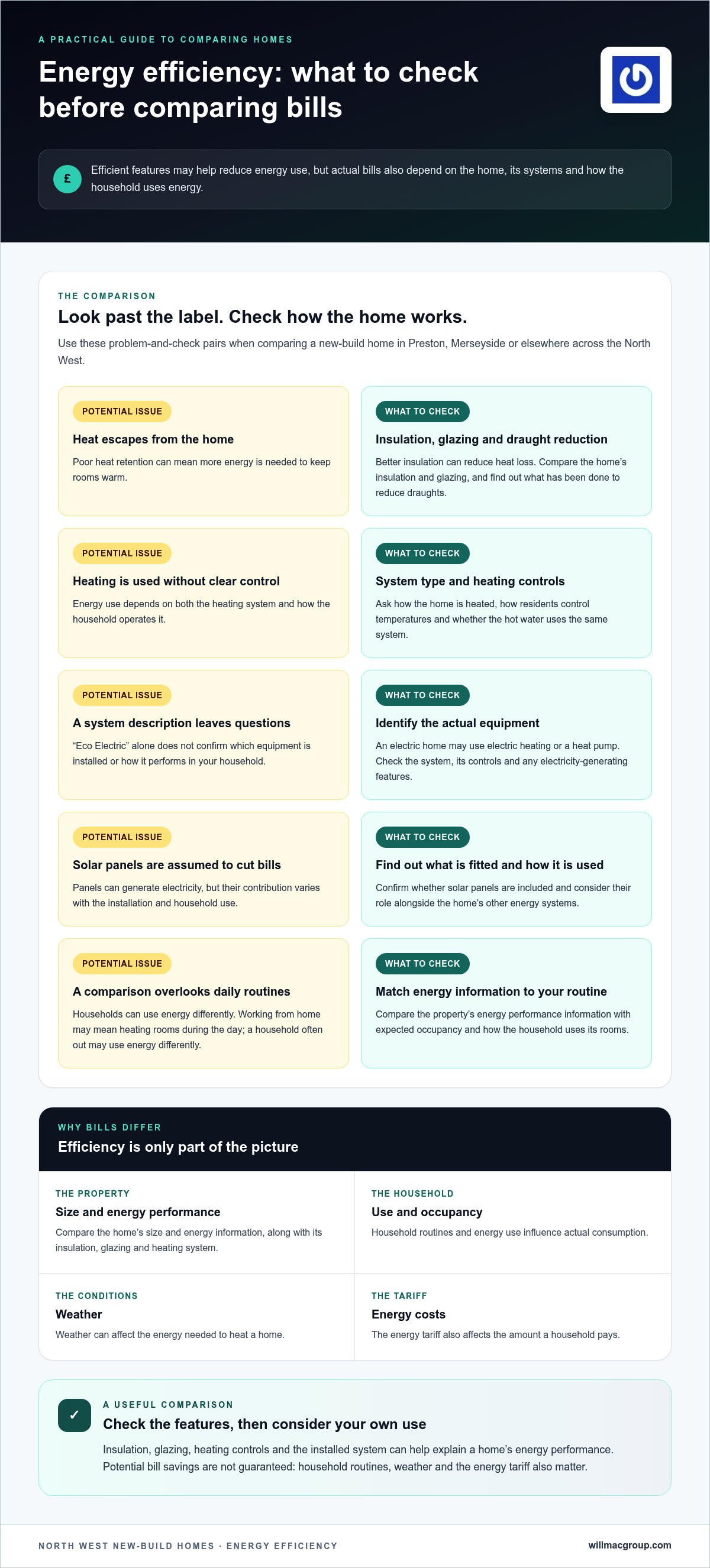
Energy efficiency depends on how well a home retains heat and how much energy its systems use. In Preston or across Merseyside, compare the property’s energy performance information, insulation, glazing and heating controls. Better insulation can reduce heat loss, while effective controls help households heat rooms when needed. These features may reduce energy use, but actual bills also reflect household routines, weather and the energy tariff.
Modern construction can incorporate insulation, draught reduction and efficient heating systems from the outset. Find out how the home is heated, whether hot water uses the same system and how residents control temperatures. An electric home may use electric heating or a heat pump; the system type and how it is used affect consumption. Solar panels, where fitted, can generate electricity, but their contribution depends on the installation and household use.
“Eco Electric” is a description to investigate, not a guarantee of lower bills. Check the actual equipment and how it works: identify the heating system, controls and any electricity-generating features. Compare the home’s energy information with your expected occupancy and routine. For example, working from home can mean heating rooms during the day, while a household that is often out may use energy differently.
Location also shapes daily routines. A lively district near universities and transport links may suit residents who travel regularly, while a countryside setting can involve different journeys and patterns of home use. Compare these practical details alongside energy features rather than assuming a newer property automatically costs less to run. Assessing the home’s systems, insulation and expected use gives a more useful basis for estimating household bills across the North West.
A useful regional search starts with the lifestyle you want, then narrows down by town, plot and home layout. In Lancashire, compare urban locations with village settings and consider your travel needs. In Cheshire, distinguish established towns from newer areas where developments are expanding. A desirable location matters, but everyday access to shops, schools and transport should shape your shortlist too.
Specific schemes illustrate the range of places to explore. Emperor Park is in Wrexham, while Lathom Pastures offers named house types including the Scrivener and Forester. Redwood Gardens is in Marton Moss, and Heatherfields is in Warrington. Compare each development’s setting, available bedrooms and plot position rather than treating “North West” as one housing market. A central location may suit a different routine from a home near open countryside.
Education and local connections can help distinguish one community from another. The North West has 800 schools rated “Outstanding” by Ofsted. Use school locations as one part of a wider area comparison, alongside commuting routes and everyday facilities. For a growing household, map the journey to work, school and local services before focusing on finishes. This practical step can reveal whether a development supports the routine you expect.
Efficient design is another comparison point, but assess it through the individual home’s features and energy information. Compare insulation, heating controls and window performance rather than relying on a general “new-build” label. For a contemporary home, note which features are included in the plot and which are optional upgrades. This distinction helps you make a fair comparison between developments across England.
Compare homes at two levels: first the community, then the specific property. A setting in Lancashire or near the Lake District may appeal, but access, layout and running requirements still matter. Keep a shortlist of development names, locations, bedroom arrangements and practical advantages. This makes it easier to identify which North West home best fits your priorities.
Willmac Group can help if you’re weighing a new home against adapting the one you already own. Its comprehensive, integrated, one-roof service covers construction, brickwork and civils and groundworks, including extensions and new builds. An extension may suit households that need more space but want to stay in their current location; a new build is the route to consider when planning a home from the ground up.
For either project, clarify the intended rooms, layout and practical requirements before work begins. These details help establish the project’s scope and guide decisions about construction and brickwork. Willmac Group is a relevant next step when you’re ready to discuss an extension or new-build project.
Contact Willmac Group to discuss your building plans.
Choosing among contemporary new-build homes in the North West is also an opportunity to decide how much of the finished home you want to shape yourself. A completed property lets you assess its layout in place; planning a new build gives you a different starting point, with choices guided by your household’s needs and priorities. Write down what matters most, from room functions to how the home should work day to day. That brief can make your next conversation more focused.
Willmac Group undertakes new builds and construction, as well as extensions. If you’re weighing up a new home project or need more space in your current property, contact Willmac Group about new homes to discuss your plans.
A clear first step can turn a broad idea into a practical direction. Define what home means to you, then move forward with confidence.
North West England has new-build developments in locations including Macclesfield, Nantwich, Preston, Warrington and Wrexham. Choices range from semi-detached homes to detached houses, with different bedroom counts and plot positions. Compare the development’s location with your travel needs and preferred community size. A shortlist based on these practical factors can help you focus viewings on homes suited to your plans.
Prices vary by location, property type, plot and included specification, so there is no single regional figure that applies to every home. Compare the asking price for a specific plot with nearby properties of similar size and condition. Check whether the listed price includes the features you expect, and account for estate charges or optional upgrades when assessing the overall commitment.
Developments include semi-detached and detached houses, with bedroom options shaped by each scheme. Church View in Coppull offers three- and four-bedroom homes, while Cobblestone Wood in Lymm is planned to include one- to five-bedroom properties. Architectural details and finishes vary, so review the specification for each plot. Consider room arrangement, storage and outdoor space alongside the exterior appearance.
Some developments advertise incentives such as deposit contributions, but terms can vary by plot and offer. Request the written conditions and identify how the contribution is applied, which purchase costs it can cover and whether it changes the advertised price. Compare the full terms with your mortgage arrangements. Consider each named scheme separately from the property’s specification and ongoing charges.
Insulation, glazing, heating systems and controls affect how much energy a household uses. Review the home’s energy information and find out which features are included for the chosen plot. Running costs depend on the property, household routines, energy use and tariff, so compare expected patterns rather than relying on general claims about new homes. Find out how heating and hot water work in practice.
Read the sale documents and warranty information for the specific property before committing. Identify what the warranty covers, its start and end dates, how to report defects, and the process for outstanding snagging. Review the reservation terms and purchase contract with your conveyancer, paying attention to completion arrangements and any charges linked to shared areas. Keep copies of written commitments and inspection records.