
Obtaining planning permission for new build Cheshire is often less about the initial vision and more about how well you respect the county’s protected Green Belt and local heritage. It is a common frustration for many homeowners who find themselves caught in a cycle of council waiting times and unexpected technical survey requirements. You likely want to focus on the quality of the build, but the administrative hurdle can feel like a significant barrier to progress.
This guide provides a structured roadmap to help you manage the process with professional reliability. We’ll outline exactly what you need to move from an initial concept to a site that is ready for construction without the typical stress. We will examine the current fee structures, such as the £504 per dwelling charge in Cheshire East, whilst highlighting the specific local constraints you must address to ensure your application is successful on the first attempt.
By understanding the nuances of the Community Infrastructure Levy and the necessity of pre-application advice, you can avoid hidden costs and build a solid foundation for your project. Whether you are looking to build a single home or a larger development, this checklist ensures you are fully prepared to engage a builder with a plan that is both compliant and achievable.
Planning permission is the formal approval required from your local authority to carry out specific building works. For those pursuing a new project, obtaining planning permission for new build Cheshire is a legal necessity that ensures your property adheres to both safety standards and environmental policies. Unlike minor home improvements, constructing a completely new dwelling falls under the broader UK planning permission system. This framework is designed to prevent haphazard development and protect the character of the local landscape. While some homeowners hope to use “Permitted Development” rights, these rarely apply to entirely new residential structures. You’ll almost certainly need to submit a full application to the relevant council.
The National Planning Policy Framework (NPPF) provides the overarching guidance for these decisions across England. It sets out the government’s planning policies and how they should be applied. However, Cheshire’s local authorities interpret these rules to suit the specific needs of our county. They focus on sustainable development whilst balancing the need for new housing with the preservation of our rural heritage. Understanding this hierarchy is the first step in moving your project from a concept to a physical site ready for groundworks.
The county is divided primarily between Cheshire East Council and Cheshire West and Chester Council. Each authority operates with its own specific Local Plan, which dictates where building is encouraged and where it is restricted. It’s vital to identify your boundary early. A project in Wilmslow will face different criteria than one in Chester city centre. Beyond the main councils, many towns and villages have adopted Neighbourhood Plans. These documents give local residents a voice in the design and density of new homes in their immediate area.
Engaging with the council’s pre-application advice service is a logical first step. For a single dwelling in Cheshire West and Chester, this service costs £331.00 as of April 2026. This provides a clear indication of whether your proposal is likely to succeed before you commit to full technical drawings. It’s a transparent way to identify potential hurdles early in the process.
Applying for a new build involves far more scrutiny than a standard extension. Planners aren’t just looking at the footprint; they’re evaluating the long-term impact on local infrastructure and land use. For larger projects, you might encounter Section 106 agreements. These are legal obligations to contribute to local services like schools or roads. Even for a single bespoke home, you’ll need a comprehensive Design and Access Statement. This document justifies your architectural choices and explains how the site will be accessed by vehicles and pedestrians. This level of detail is necessary because a new build represents a permanent shift in the community’s fabric. It requires a methodical approach to everything from civils to the final brickwork to ensure the project is viable and respectful of its surroundings.
Securing planning permission for new build Cheshire requires a demonstration that your project is both aesthetically appropriate and technically sound. Planners prioritise architectural integrity, expecting new structures to reflect the “local character” of the surrounding area. In many parts of Cheshire, this means using specific materials, such as traditional red brickwork or slate roofing, to ensure the new dwelling does not look out of place. Planners also evaluate the impact on neighbouring properties, specifically looking for issues with overshadowing or loss of privacy. Under current regulations, any proposal affecting a neighbour’s property requires formal notification, allowing residents to voice concerns regarding their right to light or quiet enjoyment.
Sustainability is another non-negotiable factor. With the 2026 building standards focusing heavily on the Future Homes Standard, your application must detail how the dwelling will achieve high energy efficiency. This includes everything from insulation levels to low-carbon heating systems. It’s also vital to distinguish between your planning application and Building Regulations approval, which focuses on the structural safety and performance of the build. Engaging a specialist builder at this early stage helps ensure your design is not only likely to be approved but is also practically constructible within your budget.
Many applicants are unsure whether to apply for outline or full permission. Outline planning permission tests the “principle of development” on a piece of land. It confirms that you can build a house there without requiring detailed architectural drawings. Once granted, you must submit “Reserved Matters” applications to cover the specifics like appearance and landscaping. Conversely, full planning permission covers every detail from the outset. This is often the preferred route for bespoke new builds where the design is already finalised, as it allows you to move straight to the construction phase once approved.
Cheshire’s rural landscape brings unique challenges that require specific technical reports. You will likely need:
Site access and highways safety remain common sticking points in rural areas. You must demonstrate that vehicles can enter and exit the property safely, often requiring a visibility splay that meets council highways standards. These technical details form the backbone of a successful application, proving to the council that your project is viable from the ground up.
Building in Cheshire presents obstacles that differ significantly from urban development in neighbouring Manchester or Liverpool. Much of our county is protected by Green Belt status, which creates a high threshold for any new residential project. To secure planning permission for new build Cheshire within these areas, you must demonstrate “Very Special Circumstances”. This is not a standard box-ticking exercise; it’s a rigorous test of why the development is necessary and how it avoids harming the openness of the countryside. Planners are tasked with preserving the rural character that defines our region, meaning every proposal is viewed through a lens of conservation.
Planners generally resist new dwellings in the Green Belt unless the project involves replacing an existing structure. Even then, the “volume for volume” rule applies. Most councils restrict the size of a replacement home to ensure it isn’t materially larger than the original building, often limiting increases to a specific percentage of the original footprint. Another viable route is infill development. This involves building in a small gap within an otherwise built-up village frontage. It’s a nuanced area of policy where the exact boundary of a “village” can determine the success of your application. For sites near the River Dee or the salt-subsidence “flashes” around Northwich and Winsford, flood risk assessments are also essential to prove the site is safe and won’t increase risks elsewhere. Before you can address any of these planning considerations, you first need a suitable plot, and understanding how to find land for a new build in Cheshire is a critical step that many prospective self-builders overlook.
In historic centres like Knutsford or Chester, the focus shifts to heritage preservation. You can find specific guidance on these requirements and the application process through the Cheshire West and Chester Council planning portal. These areas require a meticulous approach to design that respects centuries of architectural history, often necessitating additional heritage statements to justify the impact of the build.
Securing approval in a Conservation Area often depends on your choice of materials. Planners frequently specify the use of reclaimed Cheshire bricks or specific clay tiles to maintain the local aesthetic. It isn’t just about the colour; the brick bond and mortar composition are often scrutinised to ensure they match neighbouring properties. Using high-quality brickwork that mirrors the local vernacular is a practical way to satisfy these strict planning conditions.
Whether it’s the distinctive red sandstone found in western Cheshire or the traditional Flemish bond brickwork seen in rural farmhouses, the craftsmanship must be evident. Sourcing sustainable, local materials doesn’t just appease planners; it ensures your new build has the longevity and character expected of a premium home. This attention to detail during the civils and construction phases is what separates a successful application from a rejected one. By planning for these constraints early, you ensure the project moves from a concept to a site ready for foundations without the frustration of repeated revisions.
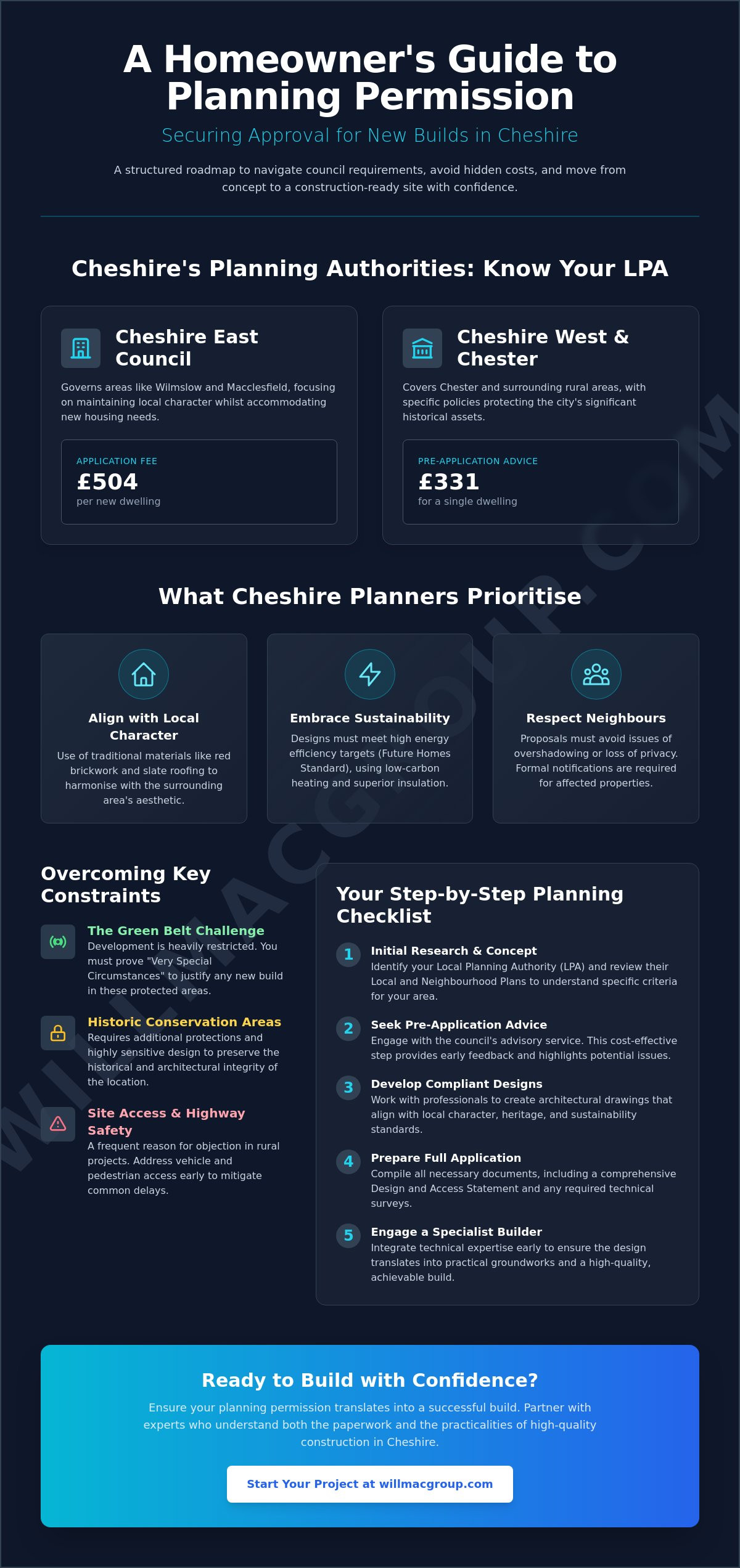
Achieving a successful outcome for your project relies on a disciplined sequence of actions. Obtaining planning permission for new build Cheshire is rarely a matter of luck; it is the result of thorough preparation and a clear understanding of local expectations. Following a structured checklist ensures that no technical or legal detail is overlooked before you break ground. This methodical approach builds trust with planning officers and reduces the likelihood of costly revisions.
Before you submit your application, verify the finer details that often cause administrative delays. Ensure you have the correct ownership certificate; Certificate A is for sole ownership, whilst Certificate B is required if you have notified other landowners. You should also confirm that drainage and utility connections are viable. Check your title deeds for restrictive covenants. These are private legal restrictions that can prevent development even if the council grants planning permission.
Approval is often the start of a new administrative phase. Most permissions come with “Conditions Precedent”. These are specific requirements that you must formally “discharge” before any construction or groundworks can begin on site. This might involve submitting a physical brick sample to the council or providing a detailed sustainable drainage scheme. Failing to discharge these conditions can render your build technically unlawful. Securing a Lawful Development Certificate later can provide additional peace of mind, confirming that your project remains compliant with the approved plans. If you are ready to transition from approved drawings to a physical structure, engaging an experienced builder early ensures that planning conditions are translated accurately into high-quality brickwork and civils.
Securing planning permission for new build Cheshire is a significant milestone, but it’s only the first stage of a successful construction project. The transition from an approved drawing to a physical structure requires a partner who understands how to translate council mandates into practical site work. Many homeowners find that their architectural plans are “over-designed”, featuring aesthetic details that are either structurally complex or unnecessarily expensive to build. By involving a professional builder early in the process, you can ensure your design is grounded in structural reality and aligned with your budget before the first spade hits the ground.
Technical planning conditions often dictate specific requirements for drainage, site levels, and materials. We specialise in managing these details, ensuring that every condition is discharged correctly through high-quality brickwork and civils. Our team focuses on the structural integrity of the build from the outset, ensuring that the foundations and groundworks meet both the planning officer’s expectations and the latest building regulations. This methodical approach prevents delays and ensures that your project moves forward with professional reliability.
Willmac Group brings 25 years of experience to every project, providing a level of craftsmanship that is essential for premium new builds. Many sites in Cheshire are constrained by narrow rural access or complex soil conditions, requiring a seasoned hand to manage the initial civils and groundworks. We don’t just follow a plan; we apply decades of technical knowledge to ensure the site is prepared for longevity. Our expertise in specialist brickwork is particularly valuable in Cheshire’s conservation areas, where matching the local vernacular is a requirement for final sign-off. We take pride in delivering results that satisfy both the rigorous standards of planners and the personal vision of the homeowner.
The move from paper plans to a construction site is a complex phase that demands transparency and precision. Local knowledge is our favourite tool for North West construction, as it allows us to anticipate the specific challenges of the Cheshire landscape. We understand the full lifecycle of a project, from the initial site clearance to the final brick laid. Our goal is to provide a sense of stability and confidence, ensuring your new home is built to the highest possible standards without the stress of technical oversights. If you have secured your plans and are ready to begin the construction phase, contact Willmac Group today to discuss your Cheshire new build project and ensure your vision is built on a solid foundation.
Navigating the local planning landscape is a complex but manageable process when you follow a clear roadmap. Success relies on respecting Cheshire’s unique heritage whilst ensuring every technical detail, from ecological surveys to sustainable drainage, is addressed before submission. By following the structured checklist we’ve outlined, you can move through the application phase with a solid plan that minimises delays and avoids the common pitfalls of Green Belt development.
Obtaining planning permission for new build Cheshire is simply the first step in creating a home that lasts for generations. Transitioning to the construction phase requires a dependable partner to handle the intricate requirements of groundworks and structural brickwork. With over 25 years of industry experience, our team acts as a seasoned guide to ensure your project meets every technical standard with transparency and care. We’re specialists in high-quality brickwork and civils, possessing a proven track record across Cheshire and the North West for delivering excellence.
If you’re ready to move from approved plans to the first spade in the ground, we’re here to support you. Discuss your Cheshire new build project with our expert team today. We’ll help you translate your vision into a structural reality that reflects the high standards of our local community.
Standard applications for planning permission for new build Cheshire typically take eight weeks for a single dwelling or minor development. Larger projects involving multiple homes usually require a thirteen week consultation period. These timescales allow for statutory bodies and neighbours to review the proposal. Delays can occur if additional technical information is requested during the process, so thorough preparation is essential.
Building in the Green Belt is restricted but possible if you meet specific criteria defined in national and local policy. You must demonstrate “Very Special Circumstances” or qualify for an exception, such as replacing an existing dwelling or completing an infill development within a village boundary. Planners focus on preserving the openness of the countryside, so any proposal must be sensitive to the rural landscape.
Planning permission focuses on the appearance of the building and its impact on the surrounding environment and community. Building regulations are a separate set of standards that ensure the structure is safe, energy efficient, and accessible. You need both approvals before you can legally complete a new build. Whilst planning deals with the “where” and “what”, building regulations handle the “how” of the construction.
The cost varies depending on the local authority and the scale of the project. In Cheshire East, the fee for a single new dwelling is £504 based on the schedule effective from December 2023. Cheshire West and Chester Council utilises a price calculator for applications, though a Planning Performance Agreement for a single dwelling is £1,103.00 as of April 2026. These fees exclude the costs of required technical surveys.
There is no legal requirement to hire an architect, but you must submit professional technical drawings to the council. These plans must accurately reflect site levels, elevations, and floor layouts. Many homeowners find that involving a specialist builder early helps ensure these designs are practically constructible. This prevents “over-design” and ensures that the final plans remain within a realistic budget for groundworks and brickwork.
If your application is refused, you have the right to appeal the decision through the Planning Inspectorate or submit a revised application. Resubmitting is often the faster route, as it allows you to address the specific objections raised by the planning officer. It’s advisable to review the refusal notice carefully to understand whether the issues relate to design, highways safety, or local policy constraints.
You can make changes to your plans by applying for an amendment. Small, “non-material” amendments can often be approved quickly, whilst more significant “minor material” changes require a Section 73 application. If the changes are substantial, the council may require a completely new planning application. It’s always best to finalise the core details of your planning permission for new build Cheshire before construction begins to avoid these delays.
Planning permission is generally granted subject to a condition that the development must begin within three years of the approval date. If you don’t start the work within this timeframe, the permission will expire and you’ll need to reapply. “Starting work” usually involves significant operations on site, such as the commencement of groundworks or foundations, rather than just clearing the site or erecting fences. Once construction is complete and you take ownership of your new property, preparing a thorough new build snagging list UK homeowners rely on is an essential next step to ensure every detail of the finished build meets the high standards you’ve invested in.