
What if the most valuable square footage in your home is currently an underutilised, narrow alleyway collecting damp leaves? For many homeowners in our city’s historic terraces, the struggle with a cramped galley kitchen and a middle room that feels perpetually cast in shadow is a daily reality. You likely want an open-plan kitchen-diner that breathes, yet the fear of losing your garden or failing to match Chester’s distinctive heritage brickwork often stalls these ambitions.
A side return extension Chester project is the tactical space-hack that solves these issues without sacrificing the depth of your outdoor area. By reclaiming that redundant side path, you can transform a dark, narrow footprint into a bright, modern hub that adds significant value to your property. This guide provides a complete comparison and planning overview, covering everything from the £321.50 Householder Planning Application fee to the structural considerations needed to ensure a seamless blend between your original Victorian masonry and a contemporary new structure.
A side return extension involves infilling the narrow strip of external land that typically runs alongside the rear outrigger of a Victorian or Edwardian property. This space is often referred to as “dead space” because its primary function is usually limited to bin storage or a neglected pathway. By incorporating this area into the main footprint of the building, you can significantly expand the width of your kitchen without needing to build deep into your garden.
In areas like Hoole and Newton, the traditional terrace layout is iconic but presents specific challenges for modern living. These homes were designed for a different era, often resulting in cramped, narrow “galley” kitchens that feel disconnected from the rest of the ground floor. A side return is perfect for Chester Homes because it addresses these spatial constraints whilst respecting the historical building lines of our local streets. A side return extension Chester project is often the most efficient way to gain internal volume in a city where outdoor space is at a premium.
Unlike a traditional rear extension, which can consume a large portion of your lawn or patio, the side return utilises land that is already underused. This preserves the full length of your garden, which is a vital consideration for property value and lifestyle in Chester’s suburban terrace rows. The primary goal is to shift from a restricted, corridor-like kitchen to a full-width living zone that accommodates dining, cooking, and socialising in one seamless environment.
The classic “two-up, two-down” layout found across Chester often leads to a disjointed ground floor. The narrow kitchen outrigger creates a bottleneck that prevents the home from flowing naturally. This layout also tends to create a “dark middle room” where the original dining area loses its natural light because the kitchen wing blocks the side window. A side return extension is a strategic conversion of underutilised external space into high-value internal living area. By removing the original side wall and replacing the roof with glazing, you can transform that gloomy middle room into a bright, inviting part of the home.
Successful extensions in Chester require a sensitive approach to materials. Our city is defined by its Cheshire red brick, and matching this masonry is essential for a cohesive finish. Integrating modern glass elements, such as roof lanterns or bi-fold doors, provides a contemporary contrast that doesn’t detract from the property’s heritage. This balance ensures the interior feels entirely modern whilst the exterior maintains the character of the terrace row. Using high-quality glazing not only solves the light problem but also creates a visual link between the new kitchen-diner and the garden beyond.
Deciding between a side return and a rear extension is a pivotal choice for any Chester homeowner. While a rear extension is often the default choice for adding raw square footage, it inevitably reduces the depth of your garden. In contrast, a side return extension Chester project focuses on internal reconfiguration, reclaiming the side alley to create a wider, more functional floor plan without encroaching on your outdoor lawn. This distinction is particularly vital in city-centre plots where every metre of green space is prized.
One significant advantage of the side return is the impact on natural light. Deep rear extensions can often leave the centre of the home feeling isolated and dark. By contrast, a side return allows for the installation of a glass roof or a series of rooflights along the entire length of the new space. This floods the original middle room with light, creating a bright, cohesive environment that a standard rear extension often struggles to match. For those seeking the best of both worlds, a wrap-around extension combines both types, though this requires a larger budget and a more extensive construction timeline.
Structurally, side returns can be more complex than they appear. Because you are often removing a significant portion of the house’s original external wall, the requirement for structural steelwork is high. You aren’t just building a box; you’re supporting the existing upper storeys. This complexity means the cost per square metre can be higher than a simple rear addition, yet the architectural result is typically more sophisticated. If you’re weighing up these choices, consulting an experienced builder can help clarify which structure best suits your property’s specific layout.
For most Chester terraces, the garden is a long, thin rectangle. A three-metre rear extension can feel like a significant loss of space. A side return preserves that garden depth, maintaining the original sightlines from the back of the house. During construction, access is often a challenge in narrow rows. Professional teams must manage the movement of materials through restricted side entries, a logistical hurdle that requires careful planning to ensure the project remains on schedule without disrupting the neighbourhood.
The return on investment for a well-executed extension in the North West remains strong, often adding between 10% and 20% to the property’s market value. However, homeowners must account for hidden costs. Relocating drainage runs is a common requirement in side returns, as these pipes often sit exactly where the new foundations need to go. You should also ensure your project complies with Planning Permission and Building Regulations to protect that future value. While the initial outlay might be higher due to the structural steel and bespoke glazing, it’s frequently viewed as a premium architectural choice that transforms the feel of a home more than a standard rear box. For a broader understanding of how different extension types compare on cost and planning, our complete guide to house extensions Chester homeowners rely on provides a detailed breakdown of every stage of the process.
Building a side return extension Chester project involves more than just adding floor space; it’s a significant structural undertaking that requires a deep understanding of Victorian and Edwardian architecture. When you remove the original side wall of a terrace outrigger, you’re effectively taking away a primary load-bearing element that has supported the property for over a century. This load must be safely transferred using Reinforced Steel Joists (RSJs). The installation of these steels is a precise operation, often requiring multiple beams to support both the upper floor masonry and the new roof structure simultaneously.
Beyond the steelwork, the civils and groundwork phase is where the longevity of your extension is determined. Many Chester terraces sit on shallow Victorian footings that aren’t designed to support modern building loads. We often encounter shared drainage runs or old clay pipes that sit exactly within the new footprint. Relocating these services whilst maintaining the correct falls and ensuring they comply with the official planning permission guidance for extensions is a task that demands professional construction management. It isn’t a stage where you can afford to cut corners.
Working in the restricted side alleys of Hoole or Handbridge presents unique logistical hurdles. Digging foundations in close proximity to a neighbour’s boundary wall requires a methodical approach to ensure the structural stability of both properties isn’t compromised. This often involves hand-digging or using specialised micro-excavation equipment to manage the tight access. At Willmac Group, our expertise in civils and groundworks allows us to navigate these complex residential sites with precision, ensuring that the new foundations are robust enough to prevent any future settlement or cracking in the original structure.
The visual success of a side return often hinges on the quality of the brickwork. Our city is famous for its Cheshire red brick, and a modern, mismatched brick can instantly devalue a heritage home. Sourcing reclaimed bricks that match the size, texture, and colour of the original masonry is a non-negotiable part of our process. It isn’t just about the bricks themselves; the pointing style and mortar colour must also be carefully considered to ensure a seamless blend. Structural excellence begins with groundworks that respect the original building’s integrity. By combining traditional brickwork craftsmanship with modern structural engineering, we ensure your new space feels like a natural evolution of the property rather than a disjointed addition.
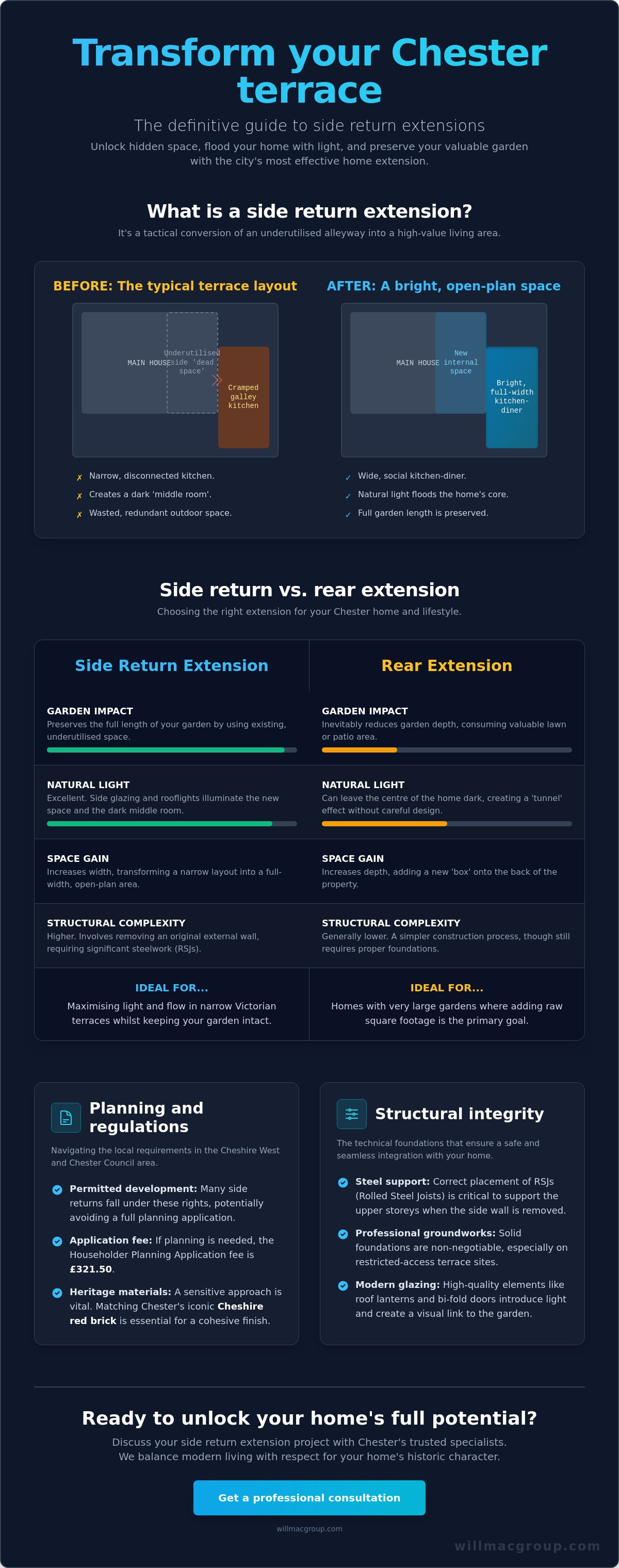
Many homeowners assume that a side return extension Chester project automatically requires full planning permission. However, many of these builds fall under Permitted Development (PD) rights. To qualify, the extension must be single-storey, no more than four metres high, and its width must not exceed half the width of the original house. Even if your project meets these criteria, applying for a Lawful Development Certificate is a wise step to confirm the build’s legality for future property sales.
For projects that do require a formal Householder Planning Application, the fee set by Cheshire West and Chester Council for 2025-26 is £321.50. If you’re unsure about your design’s viability, the council offers a duty planning officer service for free general advice, whilst a formal written pre-application response costs £331. Navigating these requirements early prevents costly delays once construction begins. You must also consider the Party Wall Act 1996, as you’ll be working on or near a shared boundary. Serving a Party Wall Notice is a legal requirement that ensures your neighbours are informed and protected throughout the build.
Chester is renowned for its historic character, but this means many terraces in areas like Hoole or near the City Walls sit within Conservation Areas. In these zones, Permitted Development rights are often restricted by Article 4 directions. Planners may insist on specific materials, such as natural slate roofing or bespoke timber joinery, to ensure the extension doesn’t detract from the street’s heritage. Matching the original Cheshire red brick becomes a regulatory necessity rather than just an aesthetic choice. If your property is a listed building, you’ll also need to secure Listed Building Consent before any work commences.
Compliance with building regulations is separate from planning permission and focuses on structural safety and energy efficiency. For an open-plan kitchen-diner, fire safety is a primary concern; you may need to install specific fire doors or a sprinkler system depending on the layout. Thermal efficiency standards for 2026 also require high-performance insulation in the floors, walls, and roof. Additionally, if you don’t use a registered competent person for electrical installations, the council applies a £399.00 charge to your building regulation application to cover their own inspections. To ensure your project meets every technical standard, it’s essential to work with a professional builder who understands local council expectations. You can explore the full scope of these regulatory requirements in our guide to planning and building house extensions in Chester, which covers the 2021 House Extensions SPD and the latest Building Control fee changes in detail.
Willmac Group has established a reputation as a trusted partner for complex residential projects across the city. Delivering a successful side return extension Chester project requires more than just standard building skills; it demands a deep understanding of our local architectural fabric and the specific geological conditions of the Cheshire area. We combine high-level construction management with the meticulous attention to detail required for heritage brickwork. This dual expertise ensures that your project is structurally sound from the ground up whilst maintaining the aesthetic integrity of your Victorian or Edwardian home.
Transparency is central to our methodical approach. We guide homeowners through the entire lifecycle of the build, from the initial site preparation and drainage relocation to the final structural completion. Our teams are experienced in working within the restricted access typical of Chester’s dense terraced streets, such as those in Hoole and Boughton. We prioritise clear communication and efficient site organisation to reduce disruption for both you and your neighbours, ensuring the build progresses smoothly and stays on schedule.
With over 25 years of industry experience, our team brings a wealth of specialised knowledge to every site. We understand that a flawless finish depends on what lies beneath the surface. Our background in large-scale civils and groundworks means we approach foundation work with a level of precision that many smaller residential builders cannot match. This technical foundation is then paired with our expertise as Specialist Brickwork Contractors. We ensure that every brick is sourced to match the existing Cheshire red and laid with the correct pointing style, creating a seamless transition between the old and the new.
Every property in Chester is unique, and a successful extension begins with a detailed, site-specific consultation. We don’t believe in one-size-fits-all solutions; instead, we work closely with your architectural designs to ensure they are translated into structural excellence. Whether you are in the early stages of planning or already have your drawings in hand, we can provide a professional assessment of your property’s potential. Contact Willmac Group today to discuss your side return extension Chester project and discover how our commitment to quality craftsmanship can transform your home into a bright, modern living space.
Transforming a narrow terrace into a modern, expansive home requires a balanced approach to design and structural engineering. By utilising the underused side alley, you can create a high-value kitchen-diner that maintains your garden’s footprint and floods your living space with natural light. As we have explored, the success of a side return extension Chester project relies on precise execution, from matching historic Cheshire red brickwork to managing complex foundation requirements in restricted sites.
With over 25 years of industry experience, Willmac Group provides the technical expertise needed for these intricate builds. We specialise in historic brickwork matching and offer comprehensive civils and groundworks expertise to ensure your extension is built on a flawless foundation. Our team understands the specific architectural heritage of Chester and the logistical demands of working in our city’s unique neighbourhoods.
When you are ready to take the next step, discuss your Chester extension project with Willmac Group. We are here to help you navigate the planning process and deliver a structure that enhances your lifestyle and property value for years to come.
Many side return extensions fall under Permitted Development rights, provided they are single-storey and do not exceed four metres in height. However, if your property is in a Conservation Area or is a listed building, these rights are often restricted. We always recommend obtaining a Lawful Development Certificate from Cheshire West and Chester Council to confirm your project’s legality before construction begins.
A high-quality side return extension Chester project can increase a property’s market value by between 10% and 20%. This uplift is primarily due to the creation of an open-plan kitchen-diner, which is a key requirement for modern buyers in the North West. The exact value added will depend on the standard of the structural work and the quality of the internal finish.
The build phase for a side return extension usually takes between 12 and 16 weeks. This timeline covers everything from the initial groundworks and drainage relocation to the installation of structural steels and the final fit-out. Complexities like bespoke glazing or significant structural alterations to the original outrigger can sometimes extend this duration, so a methodical project schedule is essential.
On the contrary, a well-designed side return will make your middle room significantly brighter. By removing the original external wall and incorporating a glass roof or multiple rooflights, you allow natural light to penetrate deep into the centre of the house. This effectively solves the “dark middle room” problem that is common in traditional Victorian terrace layouts.
You will almost certainly need a Party Wall Agreement because side returns involve building on or near a shared boundary. Under the Party Wall Act 1996, you have a legal obligation to serve notice to your neighbours before work commences. This process ensures that the structural integrity of both properties is protected and helps to maintain positive relationships with those living next door.
You can build in a Conservation Area, but you’ll likely need full planning permission rather than relying on Permitted Development. Local planners often require specific materials, such as Cheshire red brick and natural slate, to ensure the extension matches the historic character of the street. It’s important to consult with a builder who understands these heritage requirements to ensure a successful application.
The average width for a side return is typically between 1.5 and 2.5 metres. Whilst this may seem like a small addition, it often represents a 50% increase in the width of the original kitchen. This extra space is usually enough to transform a restricted galley kitchen into a full-width room that accommodates a dining table or a kitchen island.
A wrap-around extension provides more internal square footage but comes with a higher price tag and results in a smaller garden. A side return extension Chester is often considered the more tactical choice for terrace owners who want to maximise their internal space whilst preserving the full depth of their outdoor area. The “better” option depends entirely on your budget and your lifestyle priorities.